
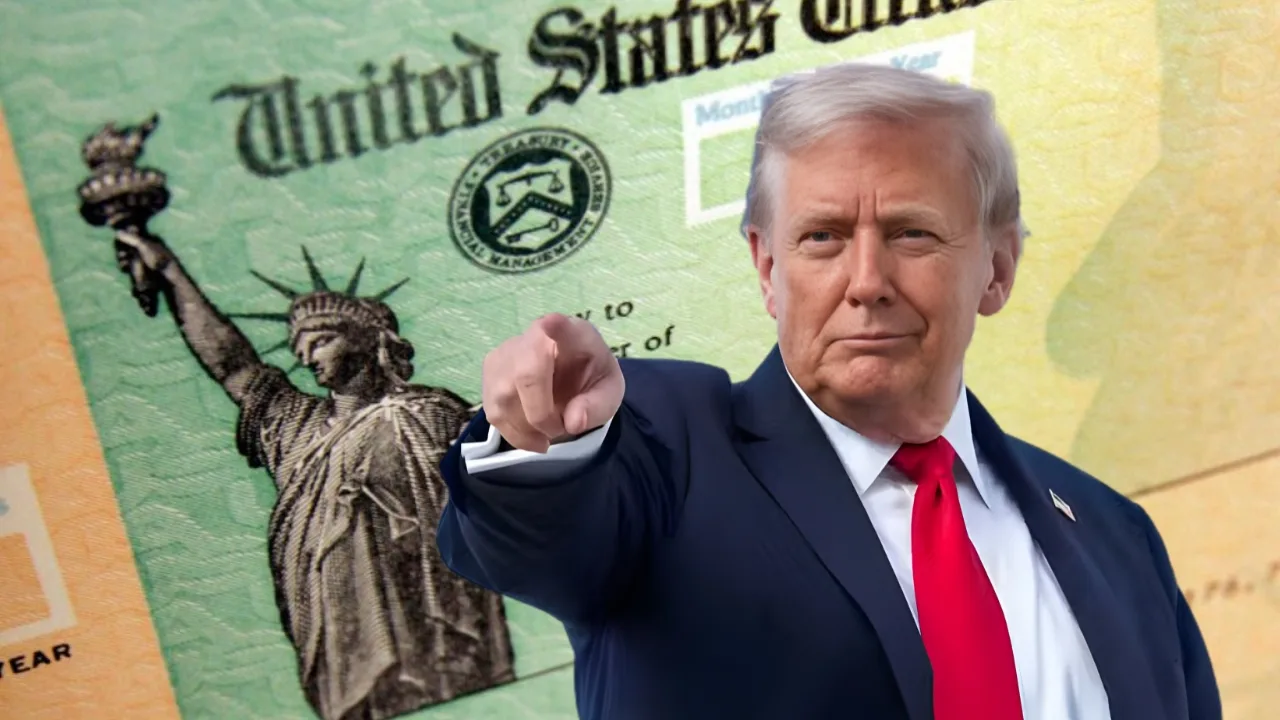
As the debate over inflation, tariffs, and cost of living heats up, President Donald Trump’s latest idea has caught national attention. In November 2025, Trump proposed sending $2,000 “dividend” payments funded directly by revenue from new tariffs, reviving memories of the pandemic-era stimulus checks.
The proposal sparked immediate interest across the country, with social media buzzing over a possible “fourth stimulus check.” However, the Treasury Department has since confirmed that no official approval or mechanism currently exists for such payments.
“We would need legislation for that,” Treasury Secretary Scott Bessent told Fox News on November 16, though he added that the payments “could go out” if legal pathways are found.
Let’s break down what’s been said so far, and what Americans should realistically expect in 2025.
Key Features of Trump’s $2,000 Dividend Proposal
| Feature | Details |
|---|---|
| Payment Type | One-time “dividend” funded by tariff revenue |
| Amount Proposed | $2,000 per eligible person |
| Target Group | Working- and middle-class families |
| Funding Source | New and existing tariffs on imports |
| Legislative Requirement | Requires approval from Congress |
| Expected Timeline | Sometime in 2025–2026 (no official date yet) |
Trump’s plan aims to “return tariff profits” to working Americans, positioning it as both a tax relief measure and a direct cash dividend.
“It’s a lot of money, but we’ve raised a lot with tariffs,” Trump told reporters on November 14 aboard Air Force One.
What is Trump’s $2,000 Tariff Dividend Proposal?
At its core, Trump’s plan is based on the idea of using tariff revenue, money collected from taxes on imports, to fund direct payments to U.S. citizens. This would be a one-time payment of $2,000 per individual, aimed at providing relief to middle-class and low-income households. The proposal echoes the earlier stimulus checks sent out during the COVID-19 pandemic but introduces a new funding mechanism: tariffs.
“This is not just about relief; it’s about returning money to the people who work hard and make America great,” Trump stated on Truth Social.
Trump’s plan is seen by many as a response to the ongoing inflationary pressures and rising cost of living, especially for working families. With many Americans still feeling the economic strain from inflation, the idea of a new financial boost has been met with both enthusiasm and skepticism.
Who Would Be Eligible for the $2,000 Dividend Checks?
While no final eligibility rules exist yet, Trump and his administration have repeatedly said the payments will be targeted toward “working families” echoing the approach used for pandemic stimulus checks.
| Income Group | Estimated Annual Income (Individual) | Likely Eligibility |
|---|---|---|
| Low-Income | Up to $40,000 | Full amount likely |
| Middle-Income | $40,001–$90,000 | Partial or full payment |
| Upper-Middle | $90,001–$167,000 | Possibly reduced amount |
| High-Income | Over $167,000 | Excluded |
According to the U.S. Census Bureau, the median household income in 2024 was $83,730, with the middle class defined as households earning between $55,820 and $167,460.
Thus, Trump’s checks would mainly target low- to middle-income Americans, potentially covering millions of households.
“This is for working families, not for the wealthy,” Press Secretary Karoline Leavitt emphasized on November 12.
Payment Dates: When Could Checks Arrive?
The timeline has shifted multiple times in Trump’s recent remarks.
| Date | Statement | Estimated Timeframe |
|---|---|---|
| Nov 9, 2025 | Trump proposed $2,000 per person dividend | TBD |
| Nov 14, 2025 | Trump said “not before Christmas” | 2025 |
| Nov 17, 2025 | Trump hinted at payments “before mid-2026” | 2026 |
Despite optimism from the White House, no checks will be issued in 2025 without congressional approval. The Treasury Department confirmed that legislation is required before any funds can be distributed.
“The payments could go out, but only once legislation is enacted,” Bessent reiterated.
How It Compares to Previous Stimulus Checks?
| Stimulus Program | Year | Eligibility Threshold (Individuals) | Payment Amount | Source of Funds |
|---|---|---|---|---|
| CARES Act | 2020 | Up to $75,000 | $1,200 | Federal COVID Relief |
| American Rescue Plan | 2021 | Up to $75,000 | $1,400 | COVID Stimulus Budget |
| Trump Tariff Dividend (Proposed) | 2025 | TBD (likely up to $90,000) | $2,000 | Tariff Revenue |
If implemented, the Tariff Dividend would be larger than previous stimulus checks but funded differently, relying on trade revenue rather than deficit spending.
Economists are split on the plan’s feasibility.
“It’s an interesting idea politically, but without congressional backing, it’s more rhetoric than reality right now,” said Dr. Ellen Moore, Senior Economist at the Brookings Institution.
Recent Updates (As of November 2025)
- Nov 9: Trump proposed $2,000 tariff dividend checks via Truth Social.
- Nov 12: Press Secretary reaffirmed commitment to the idea.
- Nov 14: Trump confirmed payments won’t come before Christmas 2025.
- Nov 16: Treasury Secretary said “legislation will be needed.”
- Nov 17: Trump suggested rollout before mid-2026.
At this stage, there’s no draft bill in Congress related to the dividend proposal, meaning checks remain a future possibility, not an approved benefit.
Why It Matters?
This proposal reflects Trump’s effort to link tariff policy with direct economic relief, a strategy aimed at boosting domestic consumption while reinforcing America-first trade principles.
If enacted, it could offer temporary financial relief to millions of working families, but critics argue it could also fuel inflation or strain trade relations if tariffs rise further.
“This could serve as a political and economic tool,” said James Hollister, policy analyst at the Center for Fiscal Studies. “But without clear legislation, it remains more of a campaign promise than a fiscal plan.”
FAQs
Is the $2,000 stimulus check confirmed for 2025?
No. The proposal exists, but Congress has not approved any legislation yet.
Who would qualify if it passes?
Likely low- and middle-income taxpayers, excluding high-income earners, similar to previous stimulus programs.
When could payments start?
If passed in 2025, checks could potentially go out in early or mid-2026.
How would it be funded?
Through tariff revenues collected from imported goods, rather than direct federal borrowing.
Will it affect inflation or trade?
Possibly. Economists are divided; some see it as consumer relief, others warn it could raise import costs.
Can the President issue these checks without Congress?
No. The Treasury has confirmed that legislation is needed before any payments can be made.