
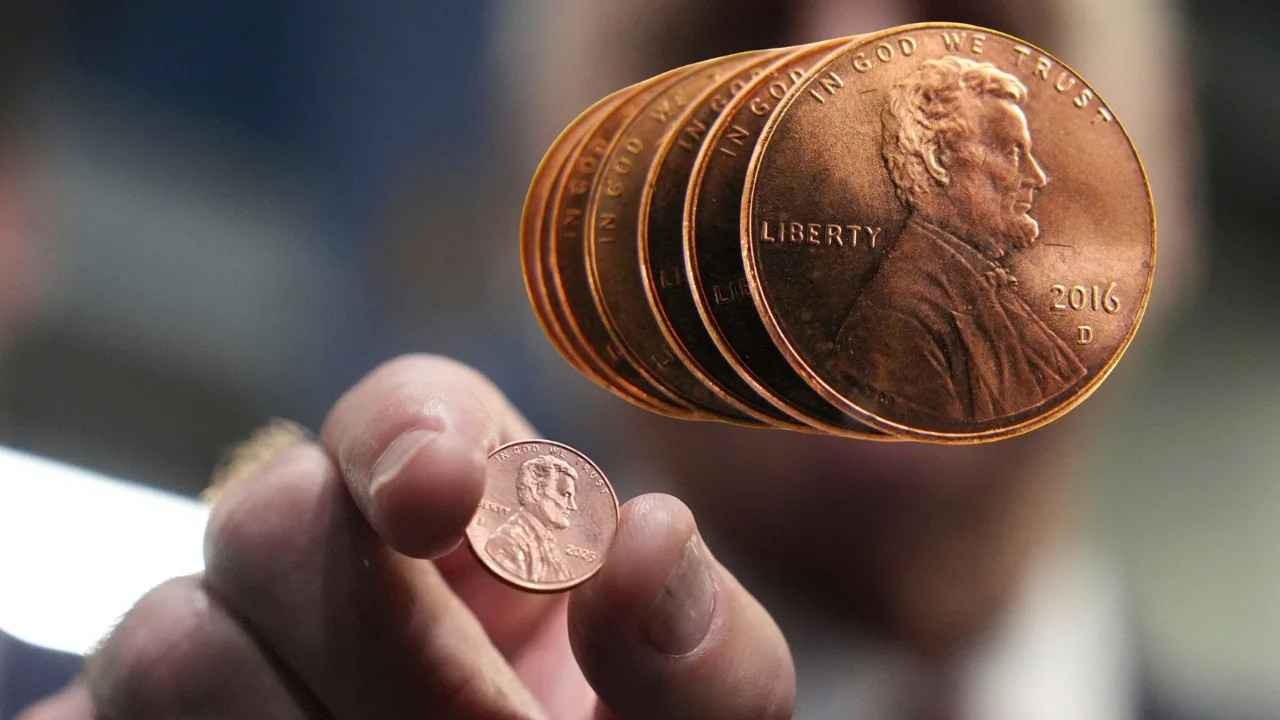
After 230 years, one of America’s most recognizable coins has reached the end of its journey. The U.S. Mint has officially stopped producing the penny, also known as the one-cent coin. The last pennies were minted in Philadelphia in May 2025, closing a long and symbolic era that began in 1787.
While the penny will no longer be produced, it remains legal tender. Billions are still in circulation, and many will continue to be used in everyday transactions. Others, especially rare or old versions, are expected to rise in value among coin collectors.
For many Americans, this change feels more emotional than financial. “The penny isn’t just money, it’s a piece of our nation’s story,” said Dr. Karen Douglas, an economic historian. “Its design and endurance reflect how the U.S. evolved through centuries of change.”
The End of the Penny: Why It Happened?
The main reason behind this historic decision is cost. Producing a single penny now costs far more than its actual value.
| Coin Type | Production Cost (2024) | Face Value |
|---|---|---|
| Penny | $0.0369 | $0.01 |
| Nickel | $0.15 | $0.05 |
| Dime | $0.06 | $0.10 |
According to the U.S. Treasury, the government lost $85.3 million in 2024 by producing over 3 billion pennies. Every new coin minted cost taxpayers more than three times its worth.
Former President Donald Trump instructed the Treasury Department to end penny production, citing its inefficiency. Officials estimate that phasing out the penny will save about $56 million annually, making the decision both economically and environmentally practical.
“The math simply doesn’t work anymore,” said Michael Carter, a former Treasury advisor. “It costs more to make a penny than it’s worth, and keeping it in production drains resources that could be used elsewhere.”
A Brief History of the Penny
| Year Introduced | 1787 |
|---|---|
| First Design | “Fugio Cent” by Benjamin Franklin |
| Last Mint Location | Philadelphia Mint |
| End of Production | May 2025 |
| Years in Circulation | 230+ |
The penny’s history dates back to the early days of the Republic. The first version, known as the Fugio Cent, was designed by Benjamin Franklin and bore the phrase “Mind Your Business.”
Over the years, the design changed many times, from the Indian Head Penny (1859–1909) to the Lincoln Wheat Penny (1909–1958), and finally to the Lincoln Shield Penny introduced in 2010.
The 2025 discontinuation marks the first time in U.S. history that the penny will not be minted.
What Happens Now?
Even though production has stopped, existing pennies will remain legal tender indefinitely. You can continue using them for purchases, but many businesses are gradually shifting toward digital or rounded cash payments.
Several major companies have already adjusted their payment systems:
- Sheetz and other retailers encourage customers to donate pennies to charity.
- McDonald’s has warned that exact change might not always be available, urging customers to use cards or mobile payments.
- Banks and coin machines will still accept pennies, though some may limit large deposits.
When the penny is fully phased out, the nickel will become the smallest U.S. coin in circulation.
Countries like Canada, Australia, and New Zealand have already made similar transitions, rounding prices to the nearest five cents. Experts expect the U.S. to follow a similar path smoothly.
Penny’s Cost vs. Value
The economics behind the penny’s demise are straightforward. It simply costs too much to make, and its practical use has declined as digital payments dominate daily transactions.
| Category | Value/Impact |
|---|---|
| Cost per Penny | $0.0369 |
| Total Annual Loss (2024) | $85.3 million |
| Expected Savings per Year | $56 million |
| Circulating Pennies | Estimated 150 billion |
| Replacement Coin | Nickel |
The U.S. Mint has long debated the penny’s future. Even environmentally, producing copper-plated zinc coins consumes resources and energy that no longer justify the expense.
“Every time you make change with a penny, the government loses money,” said Dr. Helen Reed, professor of public finance. “This decision was about efficiency, not nostalgia.”
The Cultural and Historical Legacy of the Penny
The penny holds a special place in American culture, its image of Abraham Lincoln, its use in childhood savings jars, and the phrase “a penny for your thoughts.”
It’s a symbol of thrift, tradition, and national identity. Even though it will vanish from minting presses, the penny’s cultural legacy endures.
Many Americans are expected to hold onto pennies as souvenirs, while collectors will seek out rare editions such as:
- 1943 copper penny (worth up to $100,000)
- 1955 doubled-die penny
- 1909-S VDB penny
“These coins tell America’s economic story,” said James Ortega, curator at the American Numismatic Association. “Each penny minted represents a chapter in our shared past.”
What This Means for Consumers?
In the coming months, you’ll still be able to use pennies normally. Retailers may begin rounding cash transactions to the nearest nickel, a process proven smooth in other countries.
For digital transactions, prices will remain unchanged. Credit cards, debit cards, and mobile payments already handle exact amounts, eliminating the need for pennies altogether.
The Treasury Department has confirmed that no deadlines exist for using or depositing pennies, they’ll stay valid indefinitely.
Final Thoughts
Ending the penny marks the end of an era, but also a practical step toward a more modern, cost-effective economy. The move encourages Americans to embrace digital and contactless payment systems while preserving the historical legacy of one of the nation’s most iconic coins.
The nickel now takes the penny’s place as the smallest U.S. denomination, but the sentiment behind the copper coin will live on.
“The penny may disappear from our pockets,” said Dr. Karen Douglas, “but it will never disappear from American memory.”
FAQs
Why did the U.S. stop minting the penny?
Because it costs nearly four cents to produce a coin worth only one cent, leading to millions in annual losses.
Can I still use pennies?
Yes. Pennies remain legal tender and can be used in stores or deposited in banks.
What will replace the penny?
The nickel becomes the smallest coin in circulation.
Are any pennies worth more than one cent?
Yes. Rare coins, such as the 1943 copper or 1909-S VDB penny, can be worth thousands to collectors.
Will prices change now that the penny is gone?
Most cash transactions will round to the nearest nickel, but digital and card payments remain exact.