
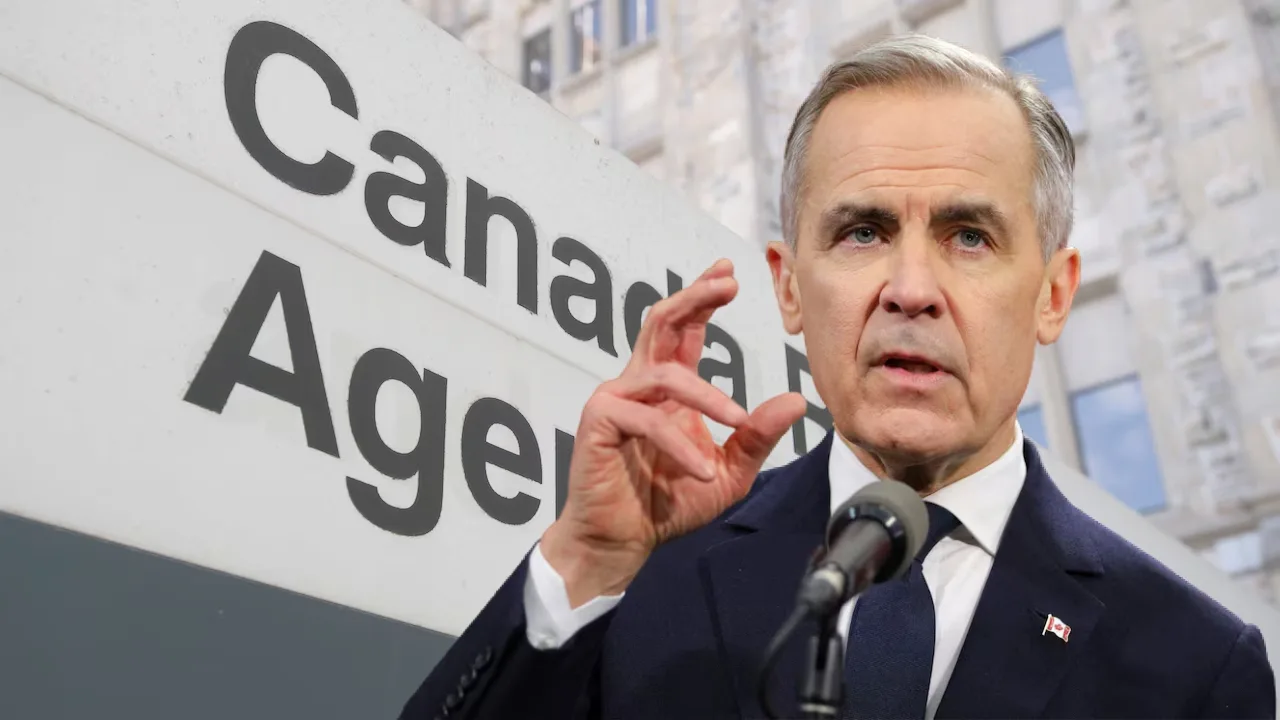
The Canada Revenue Agency has announced that the Tax-Free Savings Account contribution limit for 2026 will remain at $7,000. This marks the third consecutive year that the annual limit has stayed unchanged, following the same amount set for 2024 and 2025. For Canadians who have been eligible since the TFSA was first introduced in 2009, this means the total lifetime contribution room will reach $109,000 by 2026.
The TFSA is one of the most flexible and tax-efficient savings vehicles available to Canadians. The confirmation of the 2026 limit provides stability for investors who use the account to manage both short-term goals and long-term investment strategies.
Financial planner Karen Douglas said, the steady contribution cap allows Canadians to plan without uncertainty. She explained that consistent limits help investors manage their contributions year to year while maintaining tax efficiency.
Why the Limit Remains $7,000 in 2026?
Every year, the CRA adjusts the TFSA contribution limit to account for inflation. The limit is indexed to the Consumer Price Index (CPI) and rounded to the nearest $500. Even though inflation data for 2025 showed moderate increases, it was not high enough to trigger a rise for 2026.
The TFSA contribution limit has grown over the years, starting from $5,000 in 2009 to the current $7,000. The CRA’s decision to maintain the limit at $7,000 keeps contribution growth stable while maintaining predictability for savers.
| Year | Annual Limit | Cumulative Limit (since 2009) |
|---|---|---|
| 2024 | $7,000 | $102,000 |
| 2025 | $7,000 | $102,000 |
| 2026 | $7,000 | $109,000 |
Economist Helen Reed from the University of British Columbia said the stability reflects the CRA’s cautious approach to balancing savings incentives with inflation control. She noted that the contribution increase is likely to resume in 2027 if inflation remains moderate.
How TFSA Contribution Room Adds Up?
Understanding how contribution room works is essential to using the TFSA effectively. Your available TFSA room each year is calculated using three main factors:
- The annual contribution limit for the current year, which is $7,000 for 2026.
- Any unused contribution room carried forward from previous years.
- Any withdrawals made in the previous year, which are added back on January 1 of the next year.
If you have been eligible since 2009 and never contributed, your total room by 2026 would be $109,000. This total includes all yearly limits combined since the TFSA program began.
| Year Started | Total Room by 2026 |
|---|---|
| 2009 | $109,000 |
| 2015 | $72,000 |
| 2020 | $37,000 |
Withdrawals from a TFSA create new contribution room in the following calendar year. However, re-contributing in the same year could cause an over-contribution penalty.
James Ortega, a financial advisor, explained that many investors accidentally over-contribute because they do not realize that withdrawals only restore contribution room the following year. He advised Canadians to track their activity through the CRA’s online portal to avoid penalties.
Why the TFSA Remains a Powerful Savings Tool?
The Tax-Free Savings Account continues to be one of the most valuable investment tools for Canadians. Any growth inside a TFSA, whether it comes from interest, dividends, or capital gains, is completely tax-free. Withdrawals are also untaxed and do not count as income, which means they do not affect benefits such as Old Age Security or the Guaranteed Income Supplement.
This makes the TFSA an attractive option for both younger investors and retirees. It offers flexibility for saving, investing, and accessing funds without losing contribution room in the long term.
| Feature | Benefit |
|---|---|
| Tax-Free Growth | No taxes on investment income or capital gains |
| Flexible Withdrawals | Access funds anytime without penalties |
| Benefit Protection | Withdrawals don’t impact government credits or pensions |
| No Age Restriction | Available from age 18 with a valid SIN |
| Re-Contribution Option | Withdrawn funds are added back the next year |
Financial strategist Linda Reynolds emphasized, that the TFSA’s tax-free nature makes it suitable for almost any goal, from emergency savings to retirement planning. She noted that Canadians can use TFSAs to hold investments such as mutual funds, ETFs, GICs, or even individual stocks.
Why It Matters in 2026?
The confirmed $7,000 contribution limit for 2026 comes at a time when many Canadians are seeking stability in their finances. With living costs remaining high and inflation gradually easing, maximizing TFSA room has become even more important.
The TFSA can serve multiple financial goals at once. It can function as a long-term investment account for building retirement income, a short-term fund for emergencies, or even a medium-term plan for major purchases like a home or car.
Linda Reynolds said that the TFSA is particularly valuable because it allows Canadians to invest with confidence, knowing their earnings will not be taxed. Even small, consistent contributions, when invested wisely, can grow significantly over time.
Avoiding Common TFSA Mistakes
The CRA enforces strict rules about contribution limits, and over-contributing can result in penalties. To avoid these issues, savers should follow a few simple practices:
- Always check your available contribution room using the CRA’s My Account service before adding new funds.
- Keep track of all contributions across different financial institutions.
- Avoid re-contributing in the same year after withdrawing funds.
- Review your TFSA statements regularly for accuracy.
Over-contributions are subject to a 1 percent monthly tax on the excess amount until it is withdrawn. Taking a few minutes to verify your room before contributing can prevent costly mistakes.
Bonus: CRA’s 2025 Grocery Rebate Update
In addition to confirming the TFSA limit, the CRA also released details about the 2025 Grocery Rebate. The payment will be issued in early November, with additional installments planned for January and April 2026.
The grocery rebate is designed to help low- and middle-income Canadians offset rising food costs. Eligibility is linked to income thresholds and the GST/HST credit system.
| Household Type | Maximum Rebate Amount |
|---|---|
| Single Adult | Up to $628 |
| Family with Children | Higher amounts based on dependents |
To qualify, recipients must file their taxes and meet the income criteria. Payments will be deposited automatically for those who already receive the GST/HST credit.
The Role of TFSA in Modern Financial Planning
The TFSA has become one of the core tools for Canadian households looking to build financial security. Since it was introduced, it has encouraged saving across all income levels. Unlike the RRSP, which provides a tax deduction but taxes withdrawals, the TFSA offers true tax-free growth.
For young adults, the TFSA is a gateway to start investing early. For retirees, it provides flexibility to generate income without increasing taxable income. For middle-aged savers, it serves as a diversified platform to balance risk and reward.
Financial expert Karen Douglas recommends, that Canadians use a combination of RRSPs, TFSAs, and employer pension plans to maximize both short- and long-term benefits. She said that contributing to a TFSA even during volatile markets helps build resilience over time, since the earnings compound without tax erosion.
Conclusion
The CRA’s confirmation of the $7,000 TFSA contribution limit for 2026 ensures stability for Canadian savers. With the lifetime contribution room now at $109,000 for those eligible since 2009, the TFSA continues to be one of the most effective tools for growing wealth tax-free.
Its flexibility, simplicity, and ability to protect investment gains from taxation make it suitable for savers at every life stage. Whether used for retirement planning, emergency savings, or major goals, the TFSA remains a cornerstone of smart financial strategy.
As inflation stabilizes and interest rates remain uncertain, Canadians are encouraged to take full advantage of their contribution room and plan their savings early in the year. The TFSA remains proof that consistency and long-term vision can lead to financial independence.
Frequently Asked Questions
Does the $7,000 TFSA limit apply to everyone?
Yes. The annual limit applies to all Canadians aged 18 or older with a valid SIN. Your total available room depends on your previous contributions and withdrawals.
What happens if I withdraw money from my TFSA this year?
Withdrawals free up room, but you can only re-contribute the amount starting January 1 of the following year.
What is the total lifetime limit by 2026?
For those eligible since 2009, the cumulative limit reaches $109,000 by 2026.
How does the TFSA differ from the RRSP?
The TFSA allows tax-free withdrawals at any time, while the RRSP offers tax deductions on contributions but taxes withdrawals. Each has unique benefits depending on income level and savings goals.
What are the penalties for over-contributing?
A 1 percent monthly tax is charged on excess contributions until they are withdrawn. Always check your contribution room before adding funds.